
Keynote Speakers
Keynote Speaker Ⅰ
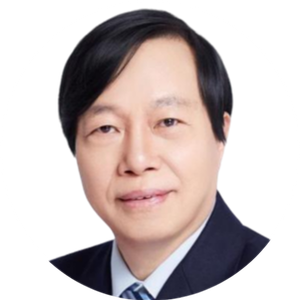
Prof. Mingyi He
Northwestern Polytechnical University, China
Biography: Mingyi He received a BEng. and MEng. from Northwestern Polytechnical University (NPU) in 1982 and 1985, respectively, and a Ph.D. from Xidian University, China, in 1994.
Dr He has been with the School of Electronics and Information, NPU, where he is currently the Leading Professor for NPU signal and information processing. He is the Founder and Director of Shaanxi Key Laboratory of Information Acquisition and Processing and the Director and Chief Scientist of the Center for Earth Observation Research. He was a visiting professor at the University of Adelaide and the University of Sydney, Australia. He conducted a number of national projects and international joint research projects or joint graduate programs (such as 863 HiTech programs and NSFC key project in China; Rockwell International Collins project in the USA; joint education programs and research with the University of Adelaide and NPU, and an international R&D Center with MENSI, France). He has published more than 300 papers in the IEEE Trans. Pattern Analysis and Machine Intelligence, Geoscience and Remote Sensing, International Journal of Computer Vision, Signal Processing, IEEE Conference on Computer Vision and Pattern Recognition (CVPR), ICIP, IGARSS, ChinaSIP, ICIEA, etc. He is the author or coauthor of five books (including Digital Image Processing: Science Press, 2008 and Neural Network and Signal Processing Systems: NPU Press, 1998), etc. He has made valuable contributions to hyperspectral image processing, computer vision and image processing, neural networks and intelligent information processing, with notable applications to X-ray image processing for luggage inspection, laser-finder test system for airborne systems, and hyperspectral image processing applications, etc.
Prof. He has been a member of the Advisor Committee of China National Council for Higher Education on Electronics and Information, a member of the Chinese lunar exploration expert group, the vice-director of the Spectral Imaging Earth Observation Committee of China Committee of International Digital Earth Society, the vice-president of Space Remote Sensing Society in Chinese Society of Astronautics (CSA), and the vice-chairman of the Institution of Engineering and Technology (IET) at Xi'an Network, the vice-president and SIP committee chairman of Shaanxi Institute of Electronics. He has served in a number of international conferences (such as general co-chair of IEEE ICIEA'09, co-chair of the ICIEA'13 TPC, general chair of IEEE SPS sponsored ChinaSIP 2014). He was the recipient of the IEEE CVPR 2012 Best Paper Award and is recognized as the '2012 Chinese Scientist of the Year' and was awarded 10 scientific prizes from China and the governmental lifelong subsidy for outstanding contribution to higher education and scientific research by the State Council of China since 1993.
Keynote Speaker Ⅱ
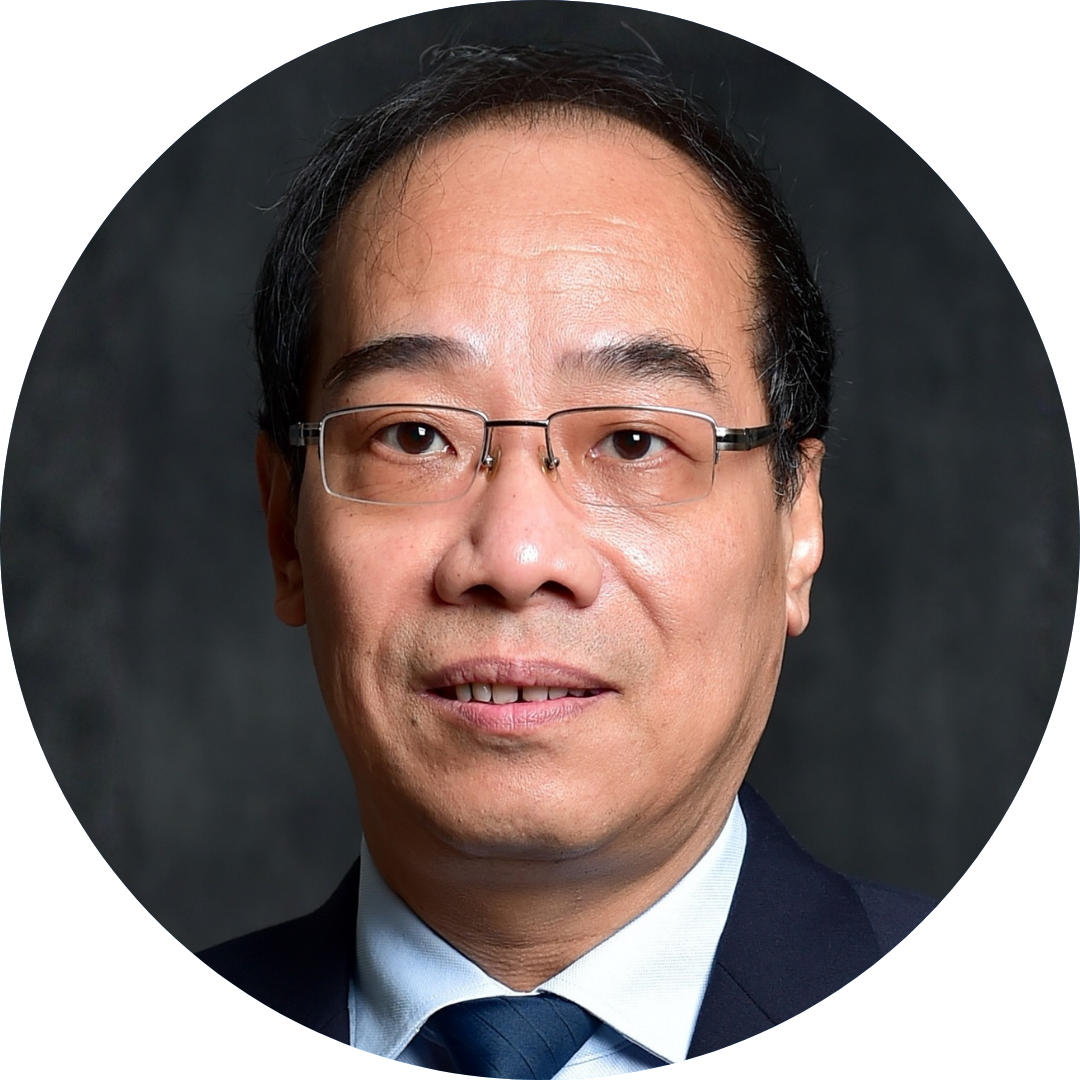
Prof. Guangzhi Wang
Tsinghua University, China
Biography: Professor Wang Guangzhi's laboratory focuses on medical image processing and computer-assisted surgery. Addressing clinical needs, it develops cutting-edge technologies in medical image analysis, multimodal image fusion, surgical planning, surgical navigation, surgical robots, and motion tracking. The laboratory has formed new methods, devices, and paradigms for assisted diagnosis, treatment, evaluation, and rehabilitation based on medical imaging, which have been translated and applied in a variety of medical device products. These innovations help doctors achieve precise, minimally invasive, and high-quality diagnosis and treatment, and the developed innovative products have been widely used in clinical practice.
Speech Title: Multimodal Information Perception and Intelligent Processing in Image-Guided Stereotactic Neurosurgery
Abstract: In recent years, intelligent medical devices, such as surgical robots, have made great progress and have become the most concerned high-end medical instruments. Innovative products continue to emerge and expand the application field.
The report will analyze the role of robot intelligent assistance in image-guided surgery application scenarios, and take our research experience of neurosurgical robots as an example to discuss how to improve the accuracy, convenience, and autonomy of surgical robots with the help of multimodal information perception in clinical applications from the perspective of multi-level perception and decision-making.
Keynote Speaker Ⅲ

Prof. Tae Kyun Kim
Korea Advanced Institute of Science and Technology, Republic of Korea
Biography: Tae-Kyun (T-K) Kim is a professor and the director of the Computer Vision and Learning Lab at the School of Computing, KAIST since 2020, and has been an adjunct reader at Imperial College London (ICL), UK, from 2020 to 2024. He led the Computer Vision and Learning Lab at Imperial College during 2010-2020. He obtained his PhD from the University of Cambridge in 2008 and a Junior Research Fellowship (governing body) at Sidney Sussex College, Univ. of Cambridge during 2007-2010. After his BSc and MSc from KAIST in 1998 and 2000, he worked at Samsung AIT from 2000 to 2004 (military duty). His research interests primarily lie in machine (deep) learning for 3D computer vision, generative AI, and AI with Physics, including articulated 3D hand/body reconstruction, face analysis and recognition, 6D object pose estimation, activity recognition, object detection/tracking, and active robot vision, which leads to novel active and interactive visual sensing. He has co-authored over 120 academic papers in top-tier conferences and journals in the field, and has co-organised a series of HANDS workshops and 6D Object Pose workshops (in conjunction with CVPR/ICCV/ECCV) from 2015 to 2020. He was the general chair of BMVC17 in London, the program co-chair of BMVC23, and is an Associate Editor of IEEE Trans on PAMI, Pattern Recognition Journal, and Image and Vision Computing Journal. He regularly serves as a (Senior) Area Chair for top-tier vision/ML conferences. He received KUKA best service robotics paper award at ICRA 2014, and 2016 best paper award by the ASCE Journal of Computing, and the best paper finalist at CVPR 2020, and his co-authored algorithm for face image representation is an international standard of MPEG-7 ISO/IEC.
Keynote Speaker Ⅳ
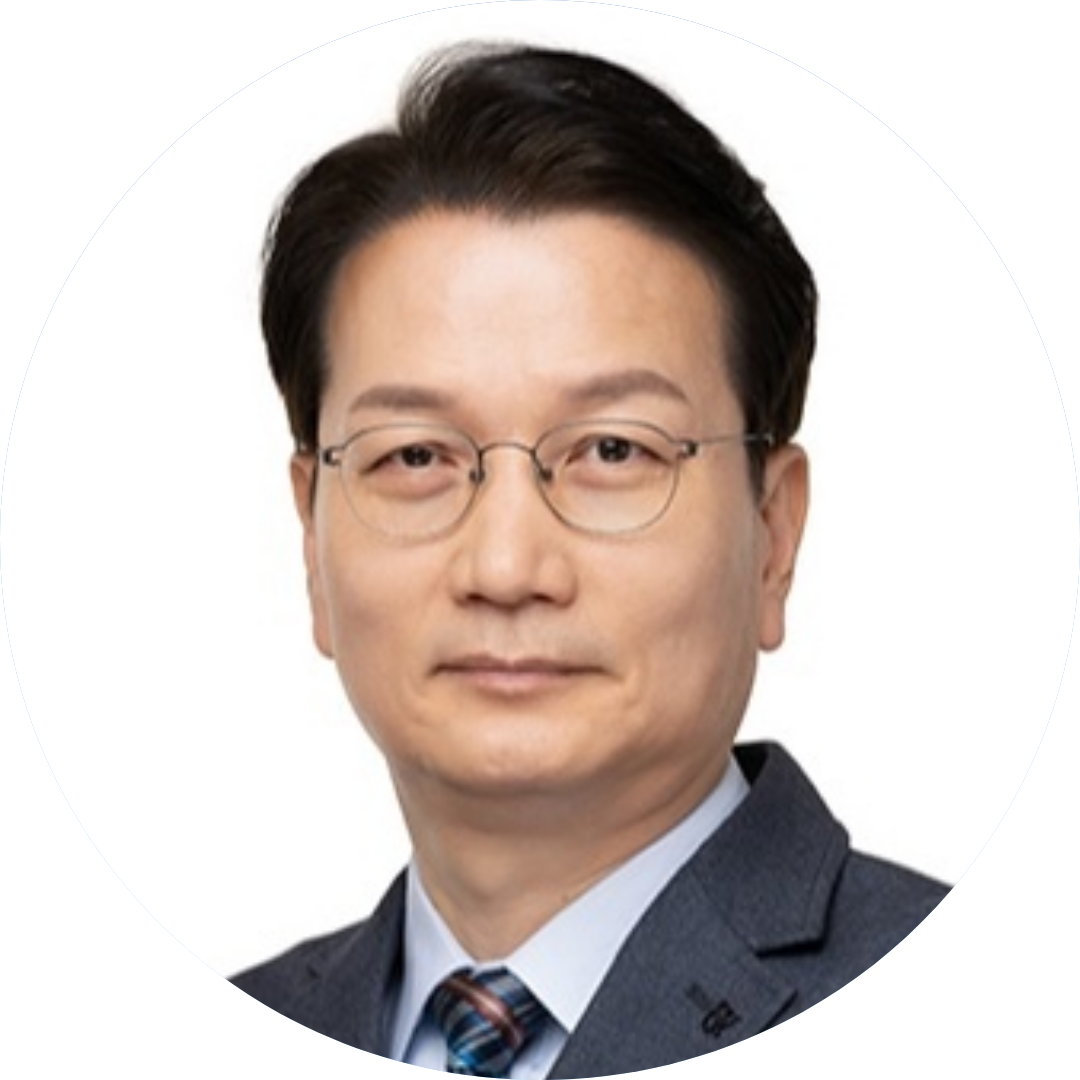
Prof. Sung-Bae Cho
Yonsei University, Republic of Korea
Biography: Sung-Bae Cho received the B.S. degree in computer science from Yonsei University, Seoul, South Korea, and the M.S. and Ph.D. degrees in computer science from the Korea Advanced Institute of Science and Technology (KAIST), Taejeon, South Korea. He was an Invited Researcher with the Human Information Processing Research Laboratories, Advanced Telecommunications Research (ATR) Institute, Kyoto, Japan, from 1993 to 1995; and a Visiting Scholar with the University of New South Wales, Canberra, Australia, in 1998. He was also a Visiting Professor with the University of British Columbia, Vancouver, Canada, from 2005 to 2006; and King Mongkut’s University of Technology, Thonburi, Bangkok, Thailand, in 2013. Since 1995, he has been a Professor with the Department of Computer Science at Yonsei University and an Underwood Distinguished Professor since 2021. He has published over 230 journal articles and over 680 conference papers. His research interests include neural networks, pattern recognition, intelligent man–machine interfaces, evolutionary computation, and artificial life. He was a recipient of the Richard E. Merwin Prize from the IEEE Computer Society in 1993. He received several distinguished investigator awards from the Korea Information Science Society in 2005 and the GaheonSindoricoh in 2017. He was also a recipient of the Service Merit Medal from the Korean Government in 2022.